
By Dr. Rosabel Young M.S., M.D.
Some of my patients with brain injury have problems with memory and math but their creative capacity is still okay. They may have trouble learning the traditional ways, such as reading instructions or doing those boring speech therapy exercises. It may be easier and also more productive to do something creative, like painting, drawing, or playing a musical instrument.
One of my patients, Delia, had a brain injury at the age of 42, young enough that she was eager to get back to work as soon as possible. Unfortunately, her memory and cognitive skills didn’t recover despite two years of specialized brain injury rehabilitation in a hospital, and the doctors declared her permanently disabled.
However, after she returned home, she noticed that she was able to remember manual tasks more easily than by reading. I encouraged her to use visuals to remind her of things, drawing little pictures on Post-it notes instead of word reminders. Her artistic skill improved and she started doing portraits of her friends and neighbors, and then oil paintings within one year. When she ran into an obstacle because of her disability, she used her creativity to get around those obstacles. She followed the examples of old masters who continued to paint despite various disabilities – such as Monet who had cataracts and arthritis, but he used this as an opportunity to branch into a new artistic style using larger brushes and bigger strokes, which you can see in Monet’s artwork.
Another change after her brain injury was not being able to understand measures and weights, or even make estimates. She would go to the store to buy milk, but couldn’t tell the difference between a gallon and a quart unless she actually held the bottles with both hands to feel their sizes. She was trying to make a dress for her niece’s daughter, but had a hard time getting the measurements right until she tried doing it using tangible comparisons – such as her fingers to set the hem and sleeve lengths. It was easier to do the sewing tasks through visualization than using numbers.
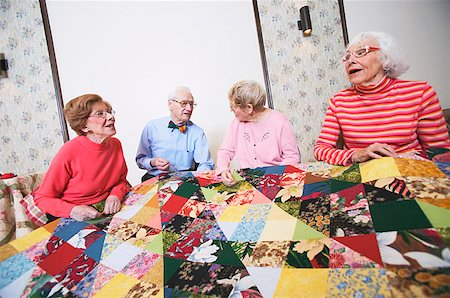
Delia used to get depressed but now she helps her friends when they are down. Late in 2020, an older lady in her neighborhood died and her quilts were selling at a thrift store. Her neighbors didn’t want to keep them, and her own family said that looking at them made them feel depressed. But Delia had an eye for the value of creativity. She bought some of the old quilts and started practicing patchwork with different colors, then taught herself to make some quilts with crochet. She was able to draw patterns and templates for quilts with her own original designs. She now holds group events with neighbors that have also taken up quilting. It has become an expression of their appreciation for their neighbor’s legacy.